Case for Pre-Tribulation Rapture
5/8/20247 min read
By Rick W.
Introduction
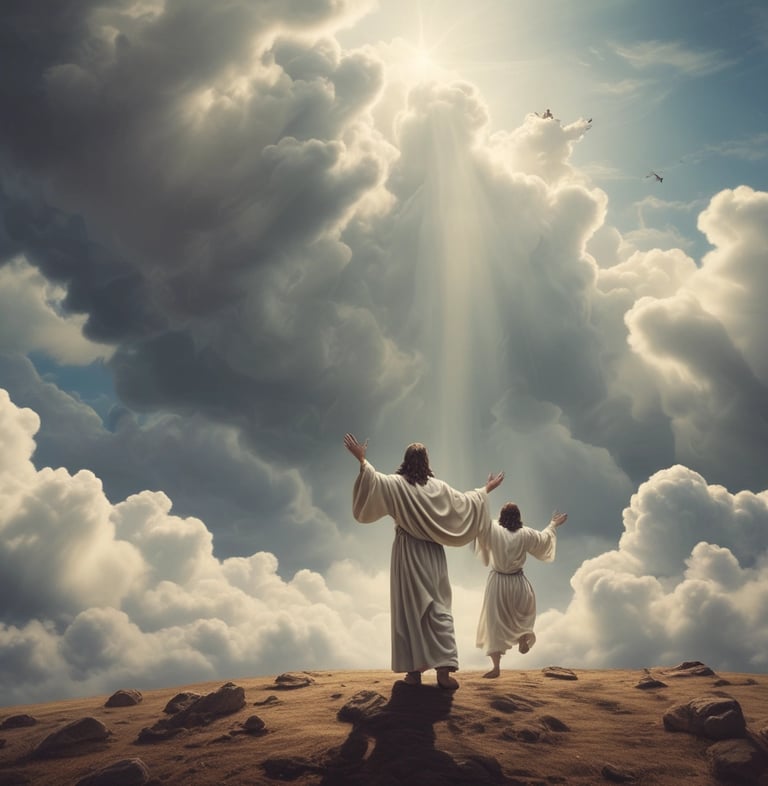
The teaching of a Pre-Tribulation Rapture—that Christ will come for His Church before the Tribulation begins—has often been dismissed as a “new” doctrine, originating in the 19th century. But history shows it was not invented then; rather, it was revived after centuries of neglect.
During the Middle Ages, the Roman Catholic Church, which embraced replacement theology, had no place for such a hope. A pre-Trib Rapture would have contradicted their teaching on purgatory. Even the Reformers gave little attention to prophecy; they were rightly occupied with recovering the doctrines of justification by faith and the authority of Scripture. John Calvin, for example, wrote no commentary on Revelation, calling it a “closed book.”
It wasn’t until the 18th and 19th centuries—after the separation of church and state and renewed study of prophecy—that eschatology was rediscovered. John Nelson Darby and the Plymouth Brethren clarified and spread the doctrine. Dwight Moody and others carried it across the Atlantic. Later, C. I. Scofield’s Bible notes popularized it, though he was not its originator.
At its root, the doctrine of the Rapture is not new at all. It reaches back to the Apostle Paul himself, who spoke of the “blessed hope” and taught the imminent, any-moment return of Christ (Titus 2:13; 1 Corinthians 1:7).
Why I Embrace the Pre-Tribulation Rapture
Here are my primary reasons for believing in a Pre-Trib Rapture, many of which directly oppose Post-Trib, Mid-Trib, or Pre-Wrath views.
1. The Doctrine of Imminence
Christ’s return is always presented as imminent—no signs must precede it.
Titus 2:13 – “while we wait for the blessed hope—the appearing of the glory of our great God and Savior, Jesus Christ.”
1 Corinthians 1:7 – “you eagerly wait for our Lord Jesus Christ to be revealed.”
2. The Doctrine of Grace
Grace means deliverance from God’s wrath. The Tribulation is clearly described as a time of wrath.
Romans 5:9 – “…how much more shall we be saved from God’s wrath through him!”
3. Christ’s Promise of Heavenly Union
Jesus promised to take His disciples to be with Him in heaven.
John 14:3 – “I will come back and take you to be with me that you also may be where I am.”
4. Deliverance From Wrath, Not Through Wrath
Revelation 3:10 – “I will also keep you from the hour of trial that is going to come on the whole world…”
1 Thessalonians 1:10 – “Jesus…rescues us from the coming wrath.”
1 Thessalonians 5:9 – “For God did not appoint us to suffer wrath but to receive salvation…”
5. Silence on Tribulation Preparation
Paul gives no instructions for believers to endure the Antichrist or the Tribulation.
6. Paul’s Logic in 2 Thessalonians 2
The Thessalonians feared they were already in the Tribulation. Paul assured them that the Day of the Lord could not have come since the Antichrist had not yet been revealed. If they had expected the Rapture to follow the Antichrist’s rise, they wouldn’t have been confused.
7. Events in Heaven Require the Church’s Presence
The judgment seat of Christ (Bema) and the Marriage of the Lamb occur in heaven before the Lord’s return. A Post-Trib Rapture leaves no time for these.
8–12. Distinctions Between the Rapture and Second Coming
At the Second Coming, Israel is regathered on earth (Matthew 24), not caught up to meet Christ.
Gentile nations are judged on earth (Matthew 25:31–46). If all believers were glorified at the Rapture, there would be no “sheep” left to enter the Millennium in human bodies.
Tribulation martyrs are resurrected after Christ returns (Revelation 20:4), showing their resurrection was distinct from the Church’s.
13–15. Revelation’s Structure
The 24 elders in Revelation 4:4 represent the glorified Church already in heaven.
After Revelation 3, the Church is absent from the narrative until it returns with Christ in chapter 19.
16. Daniel’s 70th Week
Daniel 9:24–27 specifies the prophecy concerns “your people” (Israel). The Church, a mystery age, is absent from this timetable.
17. God’s Consistent Pattern
God does not judge the righteous with the wicked (cf. Noah, Lot).
2 Peter 2:9 – “the Lord knows how to rescue the godly from trials.”
18. Comfort and Hope
The Rapture is called a “blessed hope” and a comfort (1 Thessalonians 4:18). A Post-Trib expectation of beheading under Antichrist hardly qualifies as comfort.
Responding to Common Objections
Objection 1: “There is only one Second Coming.”
The New Testament uses the same word (parousia) for both Christ’s coming for His Church and His coming with His Church. Context shows these are distinct phases.
Objection 2: “No clear Scripture teaches escape from the Tribulation.”
John 14:3, 1 Thessalonians 1:10, 1 Thessalonians 5:9–10, and Revelation 3:10 all clearly promise exemption.
Objection 3: “If the Church leaves, the Holy Spirit leaves too—so how can anyone be saved?”
The Spirit worked before Pentecost and will work again after the Church is gone, just as in the Old Testament.
Objection 4: “The first resurrection only happens at the Second Coming.”
The first resurrection occurs in phases: Christ, then the Church, then the Tribulation martyrs.
Objection 5: “God can protect His people during wrath.”
He could, but Scripture never says He will. Instead, it says He removes His Church.
Objection 6: “Jesus comes only once, after the Tribulation.”
Believers already return from heaven with Christ in Revelation 19. That presupposes they were caught up earlier.
Objection 7: “1 Thessalonians 4 doesn’t say we go to heaven.”
John 14 fills in the picture—Christ takes us to the Father’s house.
Objection 8: “Christians have always suffered persecution.”
The Tribulation is not ordinary persecution—it is God’s worldwide judgment, like the Flood.
Objection 9: “Israel remained in Egypt during the plagues.”
True, but Israel is present in the Tribulation (Revelation 12). The Church is not.
Objection 10: “The resurrection happens at the last trumpet.”
The “last trumpet” of 1 Corinthians 15 is not the seventh trumpet of Revelation. By Revelation 11, the Church is already seen in heaven.
Conclusion
The Pre-Tribulation Rapture is rooted in Scripture, consistent with God’s character, and provides genuine comfort for believers. The Church is not appointed to wrath. Instead, we look for the imminent return of Christ, our blessed hope.
The way events are accelerating, our departure could be very near.
See you here, or there, or in the air!
Study Guide: The Case for a Pre-Tribulation Rapture
Introduction
The Pre-Tribulation Rapture is the teaching that Christ will come for His Church before the seven-year Tribulation begins.
While critics say it’s a “new” doctrine, history shows it was revived in the 19th century after centuries of neglect.
Leaders like John Nelson Darby, Dwight Moody, and C. I. Scofield helped spread it widely, but its roots go back to the Apostle Paul.
Discussion Starter:
Why do you think eschatology (end times study) often becomes controversial in the Church?
Part I – Reasons for Believing in a Pre-Trib Rapture
1. The Doctrine of Imminence
Christ’s return is always presented as any moment, without prior signs.
Key Texts: Titus 2:13; 1 Corinthians 1:7
Questions:
What does “imminence” mean to you personally?
How does expecting Christ at any moment affect daily life?
2. The Doctrine of Grace and Wrath
Grace means believers are spared from God’s wrath.
The Tribulation is repeatedly described as a time of divine wrath.
Key Texts: Romans 5:9; 1 Thessalonians 5:9
Questions:
How is persecution different from God’s wrath?
Why is it important to distinguish between the two?
3. Christ’s Promise of Heavenly Union
Jesus promised to take His followers to be with Him in heaven.
Key Text: John 14:3
Reflection:
How does this promise bring you comfort in uncertain times?
4. Deliverance From Wrath, Not Through It
Believers are kept from the time of global testing.
Key Texts: Revelation 3:10; 1 Thessalonians 1:10; 5:9
Group Exercise:
Compare “kept from” (Rev. 3:10) with “kept through.” What difference does that make?
5. Silence on Tribulation Preparation
Paul never instructs believers to prepare for Antichrist or the Tribulation.
Question:
If Paul expected Christians to endure the Tribulation, what kind of instructions might we expect to find in his letters?
6. Paul’s Assurance in 2 Thessalonians 2
The Thessalonians feared they were already in the Tribulation.
Paul reassured them that the Rapture was still their next expectation.
Discussion:
Why were the Thessalonians troubled? How does Paul calm their fears?
7. Events in Heaven Require the Church’s Presence
The Bema Judgment and the Marriage of the Lamb occur in heaven before Christ’s return.
Reflection:
Why is it important for the Church to be in heaven before the Second Coming?
8–18. Other Key Distinctions
At the Second Coming, Israel is gathered on earth—not raptured (Matt. 24).
The sheep-and-goats judgment requires believers in natural bodies (Matt. 25).
Tribulation martyrs are resurrected after Christ’s return (Rev. 20:4).
The Church is represented in heaven by the 24 elders (Rev. 4:4).
The Church is absent from Revelation 4–18.
Daniel’s 70th week is for Israel, not the Church (Dan. 9:24–27).
God never judges the righteous with the wicked (Noah, Lot).
The Rapture is called a “blessed hope” (1 Thess. 4:18)—not a fearful expectation.
Exercise:
Read Revelation 4–19 and note every reference to Israel. Do you see the Church mentioned?
Part II – Responding to Objections
Objection: “There’s only one Second Coming.”
Response: The Bible describes Christ coming for His Church and later with His Church.
Objection: “No clear Scripture teaches escape.”
Response: John 14:3, 1 Thessalonians 1:10, and Revelation 3:10 do.
Objection: “If the Spirit leaves, no one can be saved.”
Response: The Spirit worked before Pentecost and will again after the Church is gone.
Objection: “Christians always suffer tribulation.”
Response: True—but the Tribulation is God’s wrath, not man’s persecution.
…and others (resurrection timing, last trumpet, Israel in Egypt, etc.).
Group Question:
Which objection do you find the strongest? How do the biblical responses address it?
Conclusion
The Pre-Trib Rapture provides real comfort and hope for the believer (1 Thess. 4:18).
The Church is not appointed to wrath but to salvation.
Christ’s coming is imminent—He could return at any moment.
Final Reflection:
How should the expectation of Christ’s imminent return shape how you live today?
Suggested Group Activity
Prayer Time: Pray as a group for readiness and encouragement from the hope of Christ’s return.
Memory Verse: Titus 2:13 – “while we wait for the blessed hope—the appearing of the glory of our great God and Savior, Jesus Christ.”
Write your text here...